What stress is, and what it is not
Stress is the body's response to demands. In short bursts it can sharpen attention. When pressure lasts for weeks or months without relief, it is associated with poor sleep, muscle tension, headaches, digestive discomfort, irritability and lower motivation.
Stress is not a character flaw and is not the same as a mental health condition, although prolonged stress can contribute to conditions such as anxiety or depression. This article offers general background; it cannot assess an individual's situation.
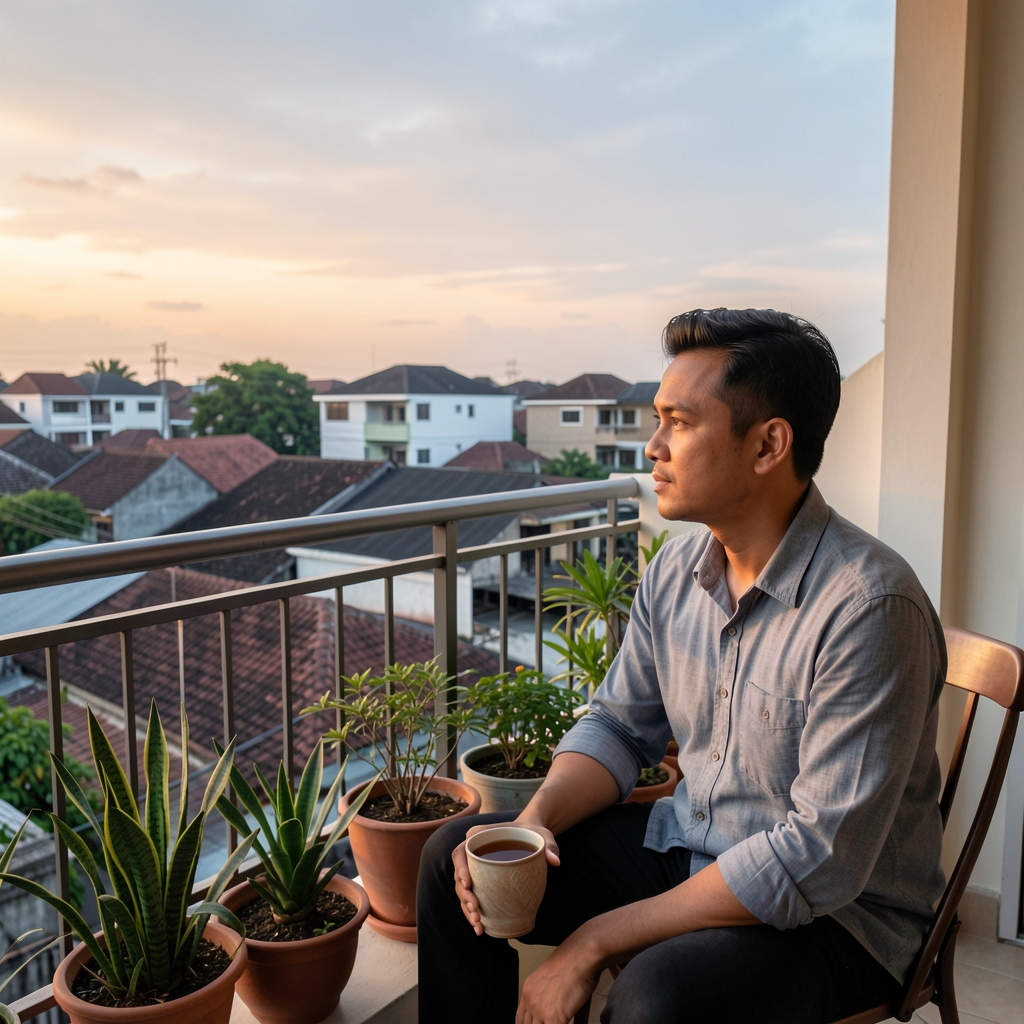
Pressures that are common in Indonesian cities
- Long hours and presenteeism in offices where leaving on time can feel unusual.
- Financial responsibility for extended family, a role many men are expected to carry quietly.
- Commuting time that reduces rest and personal time.
- Social expectations around being strong and not complaining, which discourage asking for help.
- Constant connectivity through messaging groups that blur work and home.
Recognising when stress is building
| Area | What people often notice |
|---|---|
| Body | Tight shoulders or jaw, headaches, stomach upset, tiredness that rest does not relieve |
| Mood | Irritability, feeling flat or on edge, losing patience with family |
| Thinking | Difficulty concentrating, repeated worry, indecision |
| Behaviour | More smoking, more caffeine or alcohol, withdrawing from friends, skipping meals or exercise |
Practical ways to respond
Make the load visible
Writing down what is causing pressure, and separating what can be changed from what cannot, often reduces the sense of being overwhelmed. Some people use a short evening note for this.
Use the body to settle the mind
Slow breathing, with a longer exhale than inhale, for two to five minutes can reduce the feeling of tension. Regular walking and exercise are associated with better mood and sleep.
Protect small boundaries
Examples include a fixed time to stop checking work messages, a weekly meal with family without phones, or one evening a week reserved for rest.
Talk to someone
A friend, a brother, a colleague or a religious or community leader can be a first step. Saying it aloud does not require a solution. Many men find it easier to speak while doing something together, such as walking or having coffee.

When to seek professional support
Support from a doctor, psychologist (psikolog) or psychiatrist (psikiater) is appropriate when symptoms interfere with daily life, not only when they are severe. Community health centres (puskesmas) can often provide an initial assessment and referral, and many are covered by JKN.
Reach out soon if
- Low mood, loss of interest or constant anxiety lasts two weeks or more.
- Sleep, appetite or work performance has changed noticeably.
- Alcohol or other substances are being used to cope.
- There are panic attacks, or thoughts that life is not worth living.
If you or someone near you is thinking about self-harm, or is in immediate danger, call 119 or go to the nearest hospital emergency department (IGD) now. Stay with the person if it is safe to do so.
Supporting a friend or family member
Ask directly and without judgement how they are coping, listen without hurrying to fix things, and offer to help them find a professional if they wish. Following up a few days later shows the offer was sincere.
Sources and further reading
- World Health Organization, Doing What Matters in Times of Stress: An Illustrated Guide.
- Ministry of Health of the Republic of Indonesia, mental health public information (Kesehatan Jiwa).
- Indonesian Psychiatric Association (PDSKJI), public education materials.
This article is general information and does not replace professional care. See our medical disclaimer.