How much activity is generally suggested
The World Health Organization and the Indonesian Ministry of Health describe similar targets for adults: at least 150 to 300 minutes of moderate-intensity activity per week, or 75 to 150 minutes of vigorous activity, plus muscle-strengthening work on two or more days. Moderate intensity means that breathing quickens but conversation is still possible.
These figures are a reference point, not a test. Anyone who is currently inactive can begin with shorter sessions and increase gradually. Some activity is generally considered better than none.

Three types of movement worth keeping
| Type | Examples | Why it is discussed |
|---|---|---|
| Aerobic | Brisk walking, cycling, swimming, light jogging, badminton | Supports heart and lung function and is linked with lower blood pressure. |
| Strength | Bodyweight squats, push-ups, resistance bands, free weights | Helps maintain muscle and bone, which tend to decline gradually with age. |
| Mobility and balance | Hip and shoulder stretches, yoga, tai chi, single-leg stands | Supports joint range and may reduce stiffness from long periods of sitting. |
Heat, humidity and air quality
Hot and humid conditions make it harder for the body to cool itself. Outdoor sessions are usually more comfortable before 8 a.m. or after 5 p.m. Light, breathable clothing, water before and after activity and a slower pace on very humid days are common precautions.
Air quality in Greater Jakarta varies and can be poor on some days. Public air quality indexes are available through government and independent monitoring apps. On days when readings are high, many people choose indoor options such as stair climbing, home strength work or a gym session.
Stop and seek help if
Chest pain or pressure, severe breathlessness, fainting, confusion or an irregular, racing heartbeat occurs during activity. Stop immediately and call 119 or go to the nearest emergency department (IGD).
Fitting movement into a workday
- Stand or walk for a few minutes every hour of desk work.
- Take one phone call a day on foot.
- Leave the motorbike, ojek or car a stop early and walk the rest of the way when it is safe.
- Use stairs for one or two floors, where a building allows.
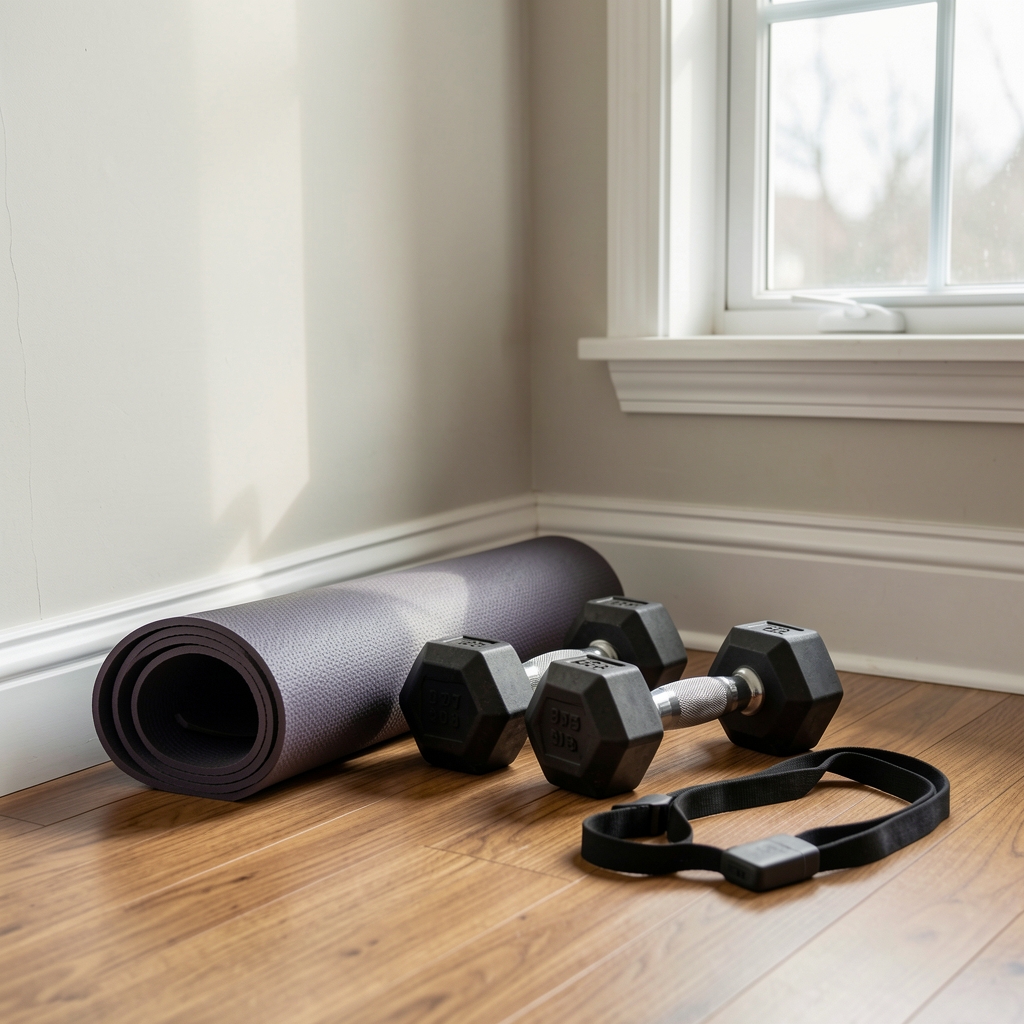
- Schedule two short strength sessions at home on fixed days, and treat them like any other appointment.
An example week for someone starting out
The outline below is an illustration only. Duration and intensity should match current fitness and any advice from a doctor.
| Day | Activity | Duration |
|---|---|---|
| Monday | Brisk walk | 20 to 30 minutes |
| Tuesday | Bodyweight strength: squats, push-ups against a wall or table, rows with a band | 20 minutes |
| Wednesday | Gentle mobility or stretching | 15 minutes |
| Thursday | Brisk walk or cycling | 30 minutes |
| Friday | Bodyweight strength, repeating Tuesday | 20 minutes |
| Saturday | Recreational sport such as badminton or football with friends | 45 to 60 minutes |
| Sunday | Rest or a relaxed walk | As desired |
Avoiding injury
Men returning to sport after several inactive years are among those who most often report strains. A short warm-up, a gradual increase of no more than about ten percent in weekly volume and an extra rest day when muscles feel unusually sore are common suggestions. Persistent joint pain, numbness or pain that wakes you at night deserves a professional assessment.
People with heart disease, uncontrolled high blood pressure, diabetes, or chest symptoms should speak to a doctor before beginning a new programme. Our check-up guide lists questions to bring to that conversation.
Sources and further reading
- World Health Organization, Guidelines on Physical Activity and Sedentary Behaviour, 2020.
- Ministry of Health of the Republic of Indonesia, physical activity guidance for adults (Aktivitas Fisik).
- American College of Sports Medicine, position stands on resistance training.
This article is general information. See our medical disclaimer.